Your AC has been running for hours. The thermostat says 74 degrees. But the back bedroom feels like it never got the message. The gap shows air is leaking from your ducts before it reaches the room.
In St. Cloud, that problem compounds fast. The heat runs from March through November. Attic temperatures push past 130°F in summer. Ductwork that expands and contracts through that range every single season does not hold its seals the way it did when it was installed. And every leak means air you paid to cool is heating an attic instead of a living room.
This guide covers the seven most reliable warning signs that your ducts are leaking, what local climate does to accelerate the damage, and what a professional Aeroseal assessment can tell you that a DIY check cannot.
TL;DR — Quick Answers
Signs your ducts need sealing: uneven room temperatures, rising energy bills, excess dust, weak register pressure, musty odors, humidity your AC cannot control, and air filters that clog ahead of schedule.
ENERGY STAR puts the average home’s duct air loss at 20 to 30 percent. In St. Cloud’s year-round cooling climate, that translates to a consistent, measurable cost on every utility bill.
Aeroseal seals from the inside out, reaches inaccessible leaks, and delivers a computer-verified certification report. No DIY product does any of those three things.
Sealed ducts stop unconditioned outdoor air from entering your HVAC system. In Central Florida summers, that is the most direct way to reduce the humidity load your air conditioner has to manage.
Top Takeaways
Duct leaks cause uneven temperatures, rising energy bills, excess dust, weak airflow, persistent odors, high indoor humidity, and air filters that clog ahead of schedule.
St. Cloud’s subtropical climate accelerates duct degradation faster than in most of the country. The thermal cycling alone separates joints that would last decades in a cooler region.
ENERGY STAR estimates the average home loses 20 to 30 percent of conditioned air through duct leaks. In a year-round cooling climate, that loss adds up on every utility bill.
DIY checks are useful for ruling things out. They cannot measure leakage volume or locate micro-cracks in inaccessible duct runs. A pressure test is the only way to know what you are actually dealing with.
Aeroseal seals up to 95% of duct leaks from the inside out and produces a computer-generated certification report showing exactly how much leakage was reduced.
Every Filterbuy HVAC Solutions Aeroseal installation comes with a 10-year Aeroseal warranty, a 1-year labor warranty, a price-match guarantee, and upfront pricing.
To get started: schedule a free assessment with Filterbuy HVAC Solutions at professional Aeroseal air duct sealing in St. Cloud. Most appointments confirmed within 24 to 48 hours.
What Air Duct Sealing Does and Why Florida Makes It Urgent
Your duct system is the delivery network for your HVAC unit. It takes conditioned air from the system and moves it to every room in the house. Understanding how air filters and ductwork work together helps clarify why a gap or crack in that network matters as much as it does. Duct sealing closes those gaps so the air you paid to condition actually reaches the room you intended it for, rather than leaking into an unconditioned attic cavity.
ENERGY STAR puts the average home’s duct loss at 20 to 30 percent of conditioned air. That figure is striking on its own. In St. Cloud, where attic temperatures can exceed 130°F and the AC runs most of the year, it means a meaningful portion of every utility dollar goes straight to heating an attic. Ducts that run through those spaces expand, contract, and separate at joints over time. The result is a system that works harder, costs more to run, and delivers less comfort than it should.
7 Warning Signs Your Air Ducts Need Sealing
Any one of these signs is worth paying attention to. Two or more together means your duct system needs a professional pressure test, not a wait-and-see approach.
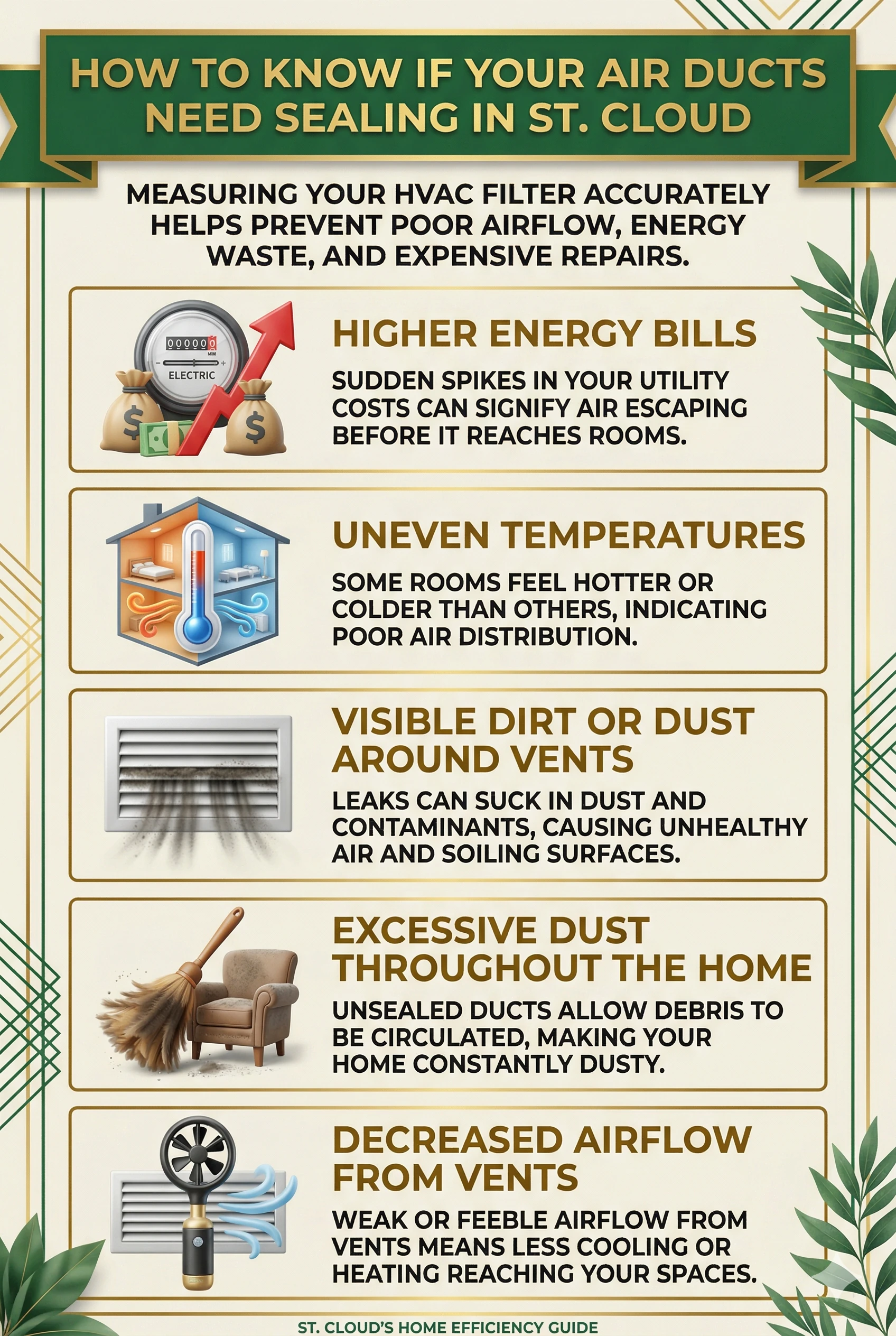
1. Uneven Temperatures Room to Room
Rooms that stay warm no matter how long the AC runs are usually receiving less conditioned air than they should. In St. Cloud two-story homes, upper-floor ducts travel through the hottest part of the attic before reaching supply vents. Leaks along that run mean the air loses pressure and temperature before it arrives.
2. Energy Bills That Keep Climbing
When your HVAC usage stays steady but the bill goes up, your system is working longer cycles to compensate for lost airflow. The unit is not failing. It is filling a leaking system. That distinction matters, because duct sealing fixes the actual problem where duct replacement or a new unit would not.
3. Dust That Comes Back Within Days of Cleaning
Return ducts pull air back toward the system for reconditioning. When those ducts leak, they pull in attic air instead of room air. That attic air carries insulation fibers, dust, and particulates your HVAC filter was never designed to handle in those volumes. Rapid dust buildup on surfaces is a direct result.
4. Weak Pressure at Supply Vents
Hold your hand near a supply register with the system running. The airflow should be noticeable. Weak pressure at the vent usually indicates significant air loss in the duct run upstream. The air left the system. It just did not make it to the room.
5. Persistent Musty or Stale Odors
Mold and mildew grow readily in St. Cloud attics, where heat and humidity combine year-round. When ducts leak, those attic air streams enter your HVAC system and distribute through every room in the house. If the smell returns after cleaning, the source is likely your return ductwork, not your living space.
6. Indoor Humidity That the AC Cannot Control
Air conditioning removes moisture as part of normal operation. Duct leaks bring humid outdoor air into the system faster than the unit can process it. Your AC dehumidifies, but it cannot keep up with an open pathway. Homes in Central Florida summers that always feel sticky despite a running system are showing this pattern.
7. Air Filters That Need Replacing Ahead of Schedule
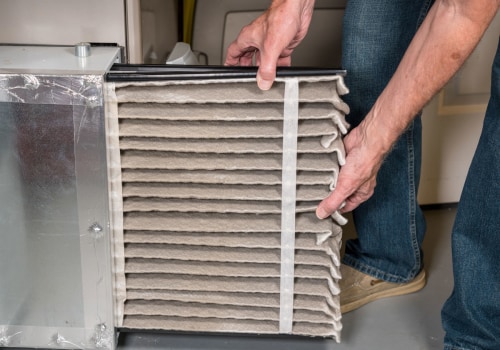
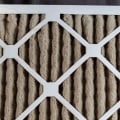
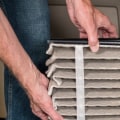
Air filters and HEPA filters have rated lifespans based on normal particulate loads. When ducts leak, the system pulls in additional particulates from unconditioned spaces, and filters clog ahead of schedule. If you are replacing furnace filters or panel filters more often than the manufacturer recommends, that accelerated timeline points to duct leakage, not a filter rating problem.
Why St. Cloud’s Climate Makes This Worse Than Most Places
We service homes across Central Florida, and the pattern we see in St. Cloud and Osceola County is consistent. Summer highs above 90°F, humidity that regularly tops 70 percent, and a cooling season that stretches nine to ten months a year put more thermal stress on ductwork than most of the country experiences. Duct materials that perform reliably in moderate climates show joint separation and seal failure here in a fraction of the time.
Older homes near East Lake Toho typically have fiberglass duct board that has been through decades of that cycling. The boards deteriorate, the seams open, and the damage compounds quietly for years before it shows up on a utility bill. Newer construction along the 192 corridor usually has flex duct, which presents a different problem: joint separations that look intact from the outside and only show up under pressure testing.
We also recommend duct cleaning alongside sealing in most Central Florida assessments. Sealing leaky ducts without cleaning them first locks years of particulate accumulation inside the lining. The order of operations matters.
What You Can Check Yourself vs. What Only a Pressure Test Can Find
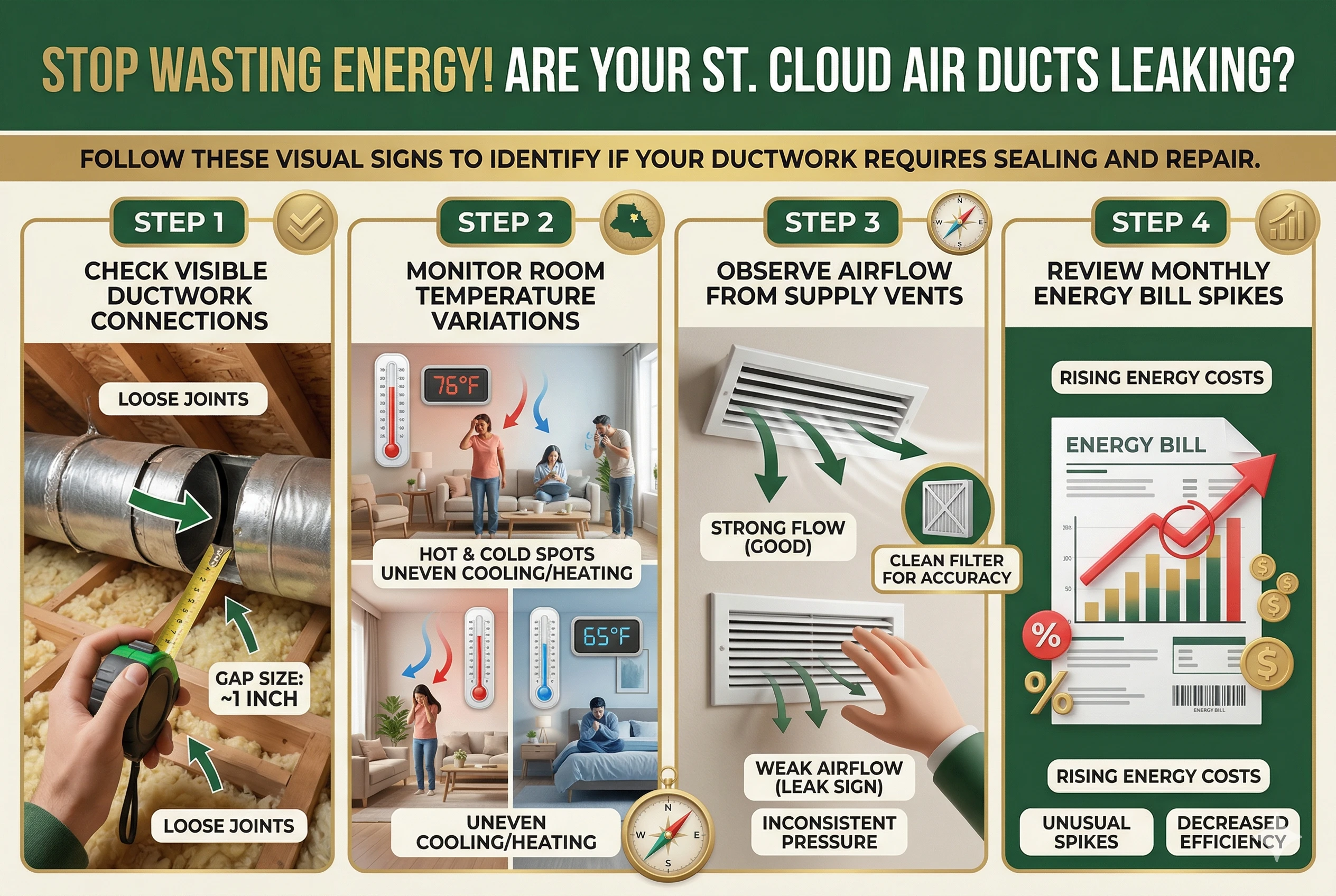
A few things are worth checking before you call:
Run your hand along accessible register seams while the system operates. You should not feel air escaping at the joints.
Look at any duct sections visible in your attic or utility room for peeling tape, separated connections, or crushed flex duct.
Hold a lit stick of incense near a return vent. Smoke drawn sharply toward the vent indicates negative pressure from leaks elsewhere in the return run.
What those checks cannot tell you is how much air you are losing, where the largest leaks are, or whether micro-cracks in inaccessible sections account for most of the loss. Most duct leaks happen in areas that are not reachable or visible without specialized equipment. A visual check is useful for ruling things out. It is not a substitute for measurement.
For the leaks you cannot see or reach, professional Aeroseal air duct sealing in St. Cloud is the only process that seals up to 95% of leaks and gives you a computer-generated report showing exactly what changed.
How the Aeroseal Process Works
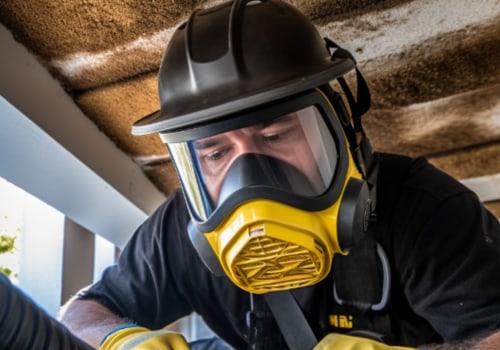
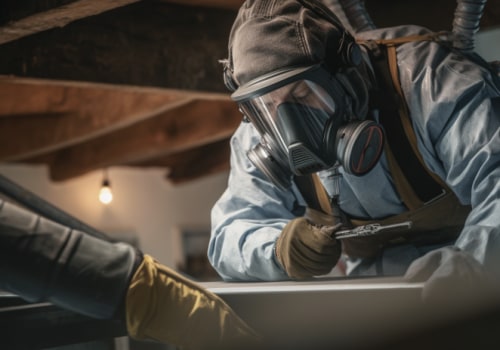
Aeroseal seals duct leaks from the inside out. A certified technician starts with a pre-seal pressure test to establish your current leakage rate. That number is the baseline for everything that follows. A non-toxic fog then enters the duct system to locate visible gaps. Next, the Aeroseal machine introduces microscopic polymer particles into the duct network. Those particles travel through the system on the airflow and bond to the edges of leaks, sealing them from the interior without requiring access to every individual run.
Real-time monitoring tracks the leakage reduction as the process runs. At completion, the technician prints a certification report documenting your before-and-after leakage rates. That report is yours to keep.
Filterbuy HVAC Solutions backs every Aeroseal installation with a 10-year Aeroseal warranty, a 1-year labor warranty, a price-match guarantee, and upfront pricing. Homeowners typically see energy bill reductions of up to 30% after sealing. Most St. Cloud appointments are available within 24 to 48 hours.
“Every time we run a pressure test on a St. Cloud home with persistent comfort problems, the leakage number tells the same story: the duct system is doing the work of a leaking bucket, and the homeowner has been paying the difference on their utility bill for years without knowing why. Aeroseal is the first tool I’ve used in this industry that closes that gap from the inside, reaches the leaks no technician can physically access, and hands the homeowner a certified number that proves it.”
Essential Resources
These seven sources give St. Cloud homeowners the information they need to evaluate duct sealing, understand indoor air quality risks, and verify contractor credentials — all from government and professional nonprofit domains.
1. ENERGY STAR’s Duct Sealing Guide: The Government Standard on Leakage and Energy Loss
ENERGY STAR’s official duct sealing and insulation initiative covers how duct leaks waste conditioned air, what the 20 to 30 percent loss estimate means in practice, and what a certified duct sealing process should deliver. The most-referenced government source on residential duct efficiency.
Source: ENERGY STAR (energystar.gov) — https://www.energystar.gov/campaign/seal_insulate/ducts
2. The DOE’s Air Sealing Resource: Efficiency Targets and What Proper Sealing Achieves
The U.S. Department of Energy’s air sealing documentation covers ductwork alongside whole-home weatherization. It sets specific efficiency improvement targets and explains what homeowners should expect from a properly executed sealing project.
Source: U.S. Department of Energy (energy.gov) — https://www.energy.gov/energysaver/weatherize/air-sealing-your-home
3. The EPA’s Indoor Air Quality Guide: What Leaky Ducts Introduce Into Your Home
The EPA’s indoor air quality resource covers the pollutants, sources, and health effects most directly relevant to duct leakage decisions — including the data showing indoor air runs two to five times more polluted than outdoor air in homes with compromised duct systems.
Source: U.S. Environmental Protection Agency (epa.gov) — https://www.epa.gov/indoor-air-quality-iaq
4. Florida DOH: Indoor Air Risks Specific to Central Florida Homeowners
The Florida Department of Health’s indoor air quality guidance addresses the specific hazards Central Florida residents face: sustained high humidity, mold exposure, and duct-related contamination. The most relevant state-level source for St. Cloud homeowners evaluating indoor air quality in their homes.
Source: Florida Department of Health (floridahealth.gov) — https://www.floridahealth.gov/environmental-health/indoor-air/index.html
5. ACCA: How to Verify That Your HVAC Contractor Meets Professional Standards
The Air Conditioning Contractors of America sets technical and ethical standards for HVAC professionals nationwide. Their contractor locator and credentialing standards give homeowners a way to verify that the technician they hire holds documented, current professional certifications.
Source: Air Conditioning Contractors of America (acca.org) — https://www.acca.org/find-a-contractor
6. The Official Aeroseal Homeowner Resource: Process, Timeline, and Warranty Details
Aeroseal’s homeowner documentation explains how the technology works, what the installation timeline looks like, and what the 10-year warranty covers. The authoritative source on what distinguishes Aeroseal from surface-applied duct tape or mastic alternatives.
Source: Aeroseal (aeroseal.com) — https://aeroseal.com/homeowners/
7. How Air Filters and Ductwork Connect: Wikipedia Reference for Homeowners
A reliable reference on air filtration technology, filter ratings, and how HVAC systems move air through ductwork. Useful background for homeowners trying to understand why filter clogging accelerates when ducts develop leaks.
Source: Wikipedia — Air Filter (wikipedia.org) — https://en.wikipedia.org/wiki/Air_filter
Supporting Statistics
These numbers come directly from U.S. government sources. Each one reflects something we measure in the field on St. Cloud homes before an Aeroseal installation begins.
1. The Average Home Loses 20–30% of Conditioned Air Through Duct Leaks
ENERGY STAR’s data shows that most homes lose between 20 and 30 percent of conditioned air before it reaches a living space.
In St. Cloud, where the AC runs the majority of the year, that loss is not a rounding error. It shows up as a measurable line item on every utility bill, every month.
In our pre-seal pressure tests, we regularly measure leakage rates at the high end of this range or above — particularly in homes with original fiberglass duct board or flex duct that has never been professionally sealed.
Source: ENERGY STAR (energystar.gov) — https://www.energystar.gov/campaign/seal_insulate/ducts
2. Properly Sealed Ductwork Can Improve HVAC Efficiency by Up to 20%
The U.S. Department of Energy reports that sealing and insulating ductwork correctly can improve system efficiency by up to 20 percent.
For Central Florida households running their AC eight to ten months a year, that improvement compounds significantly across a full cooling season.
The Aeroseal certification report documents the before-and-after leakage reduction, so the efficiency gain is a verified measurement, not an estimate.
Source: U.S. Department of Energy (energy.gov) — https://www.energy.gov/energysaver/weatherize/air-sealing-your-home
3. Indoor Air Can Be 2–5x More Polluted Than Outdoor Air
The EPA reports that indoor air pollutant concentrations run two to five times higher than outdoor levels in many homes — and leaky return ducts are a primary pathway for that contamination.
When return ducts pull unconditioned attic air into the system, they carry insulation particles, mold spores, and humidity directly into the air circulating through every room.
Sealing those ducts removes the contamination pathway. For households with allergy or asthma sufferers in St. Cloud, the air quality improvement after Aeroseal is typically the first result homeowners notice.
Source: U.S. Environmental Protection Agency (epa.gov) — https://www.epa.gov/report-environment/indoor-air-quality
Final Thoughts
St. Cloud homeowners are running their HVAC systems in one of the most demanding environments in the country. The heat does not relent, the humidity does not drop, and the cooling season does not end until November. Ductwork that was installed without being properly sealed, or sealed years ago with products that could not survive Florida’s thermal cycling, costs money every single day it goes unaddressed.
The seven signs in this guide are not obscure technical indicators. They are the everyday experience of a home that is not performing the way it should: rooms that never quite reach the set temperature, bills that creep up without explanation, air that smells wrong. Two or more of those signs present at the same time means the duct system needs professional attention. Not eventually. Now.
We have worked inside enough St. Cloud attics to know that most homeowners discover the full extent of their duct leakage only after a pressure test. The number on that test is almost always higher than they expected. Aeroseal addresses what that test finds, seals it from the inside, and documents the result. At Filterbuy HVAC Solutions, the job is not done until the certification report shows a real improvement — with numbers the homeowner can read and keep.
Next Steps
If the signs in this guide sound familiar, here is where to start:
Walk through your home and note the rooms that consistently run warmer, stuffier, or more humid than the rest — especially bedrooms and upper floors.
Pull your last three utility bills and compare them to the same months from the year before. A consistent upward trend without a change in usage habits points to system inefficiency.
Check any duct sections you can see in your attic or utility closet for disconnected flex duct, separated joints, or peeling tape.
Schedule a professional duct assessment with Filterbuy HVAC Solutions. Our technicians use pressure testing to measure your actual leakage rate before recommending any work.
Ask about Aeroseal availability. Most St. Cloud appointments are confirmed within 24 to 48 hours.
Frequently Asked Questions About Duct Sealing in St. Cloud
Q: How do I know if my air ducts are leaking?
A:
Look for rooms that stay warm no matter how long the AC runs.
Watch for utility bills that rise without a change in usage patterns.
Check for excessive dust on surfaces, weak airflow at registers, musty odors, and indoor humidity that your AC cannot seem to control.
A professional pressure test confirms leaks that a visual check cannot detect.
Q: Is duct sealing worth it in Florida?
A:
Yes. Florida’s heat and humidity demand more from HVAC systems than almost any other climate in the country.
Sealing ductwork reduces energy loss by up to 30%, improves indoor air quality, and reduces the operational strain that shortens equipment life.
In St. Cloud specifically, the investment pays back faster because the system runs longer seasons than in cooler states.
Q: How often should air ducts be inspected in St. Cloud?
A:
Every three to five years is the standard recommendation for St. Cloud homeowners.
If any of the warning signs in this guide are present, schedule an inspection sooner rather than waiting for the next scheduled interval.
Annual HVAC maintenance visits should include a duct integrity check as a standard line item.
Q: Can I seal air ducts myself?
A:
Surface-applied solutions like duct tape and mastic are temporary. In Florida’s thermal cycling conditions, they often fail within months.
Aeroseal works from the inside, reaching leaks in areas that no technician and no surface product can access.
The result is a verified, lasting seal with a 10-year warranty — not a patch that will need repeating.
Q: Does duct sealing improve indoor air quality?
A:
Yes, significantly. Sealed ducts stop the pathway that brings attic air — carrying dust, mold spores, and humidity — into your HVAC system and your living spaces.
For households with allergy or asthma sufferers, air quality improvement is typically one of the first things homeowners notice after an Aeroseal installation.
In St. Cloud’s humid climate, where unconditioned attic air carries real contamination risk, sealing ducts is one of the most direct interventions available for indoor air quality.
Schedule Your Free Duct Assessment in St. Cloud
If any of the signs in this guide describe your home, your ducts are costing you comfort and money right now. Filterbuy HVAC Solutions offers free estimates, a price-match guarantee, and EPA-certified Aeroseal technicians serving St. Cloud and the surrounding Osceola County area.
Book your professional Aeroseal air duct sealing in St. Cloud today and receive a computer-verified before-and-after report showing exactly what changed in your system.
Most appointments available within 24 to 48 hours.
Learn more about HVAC Care from one of our HVAC solutions branches…
Filterbuy HVAC Solutions - Miami FL - Air Conditioning Service
1300 S Miami Ave Apt 4806 Miami FL 33130
(305) 306-5027